
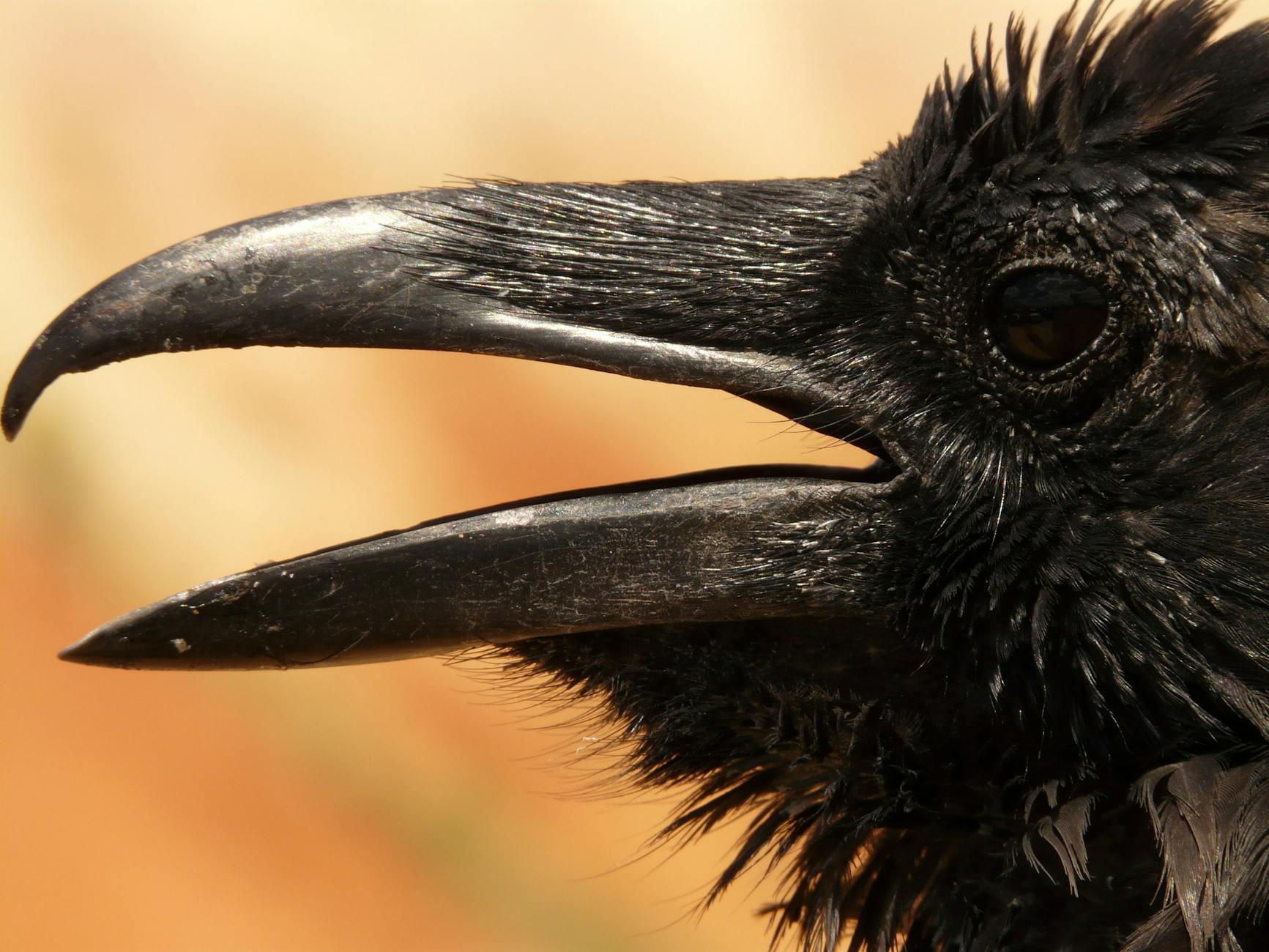
You Have the Wrong Idea About Crows

Photo by Pixabay on Pexels.com

In the Pacific Northwest, there is a widespread cultural trend of holding crows in high esteem, revering them as almost mystical creatures. To put it simply, the PNW is obsessed with its crows. The University of Washington even has a research institution dedicated to studying the corvids. If you have heard the crow ‘facts’ going around online, then they probably came from Dr. John M. Marzluff at UW. He and his team were the ones that discovered that crows hold ‘funerals’ for the dead and recognize and remember individual human faces. However, as is the case with many scientific topics, the media has significantly misinterpreted the findings of UW’s Avian Conservation Lab. This has given the average PNW crow enthusiast the wrong impression about these birds, leading them to make statements such as:

“Crows not only learn if a person has good intentions or not, but they also will communicate with each other and even pass on intergenerational prejudices.”

“Crows never forget a face.”

“If you show them loyalty, they’ll defend you.”

“If a crow attacks you, it means you are a bad person and you probably deserved it.”

“Did you know crows recognize people and tell other crows if you’re nice or mean?”

“They absolutely remember your face if you’re nice to them, and they pass that info along to their murder-mates and children. I’m on a first name basis with my neighborhood crows.”

-comments from r/Portland

and

“I’m out”

“me too”

“Oh my God. Do not fuck with crows.”

-comments from ‘barter town’

There are dangers involved with misinterpreting crow facts including 1) an increase in human-wildlife conflict, 2) misguided conservation efforts, and 3) all your friends turning on you in the group chat when you ask to borrow a BB gun to shoot one. Therefore, the widespread misunderstandings of crow facts must be corrected.

Let’s start with crow ‘funerals.’ It is often said that crows have funerals or “hold vigil” to memorialize their dead and process the loss. This is a complete mischaracterization of crow behavior when they encounter a crow carcass. The particular behavior that crows occasionally display when they encounter a dead crow has only been characterized as a ‘funeral’ since 2012. These cacophonous displays are rare. It is not the case that every crow gets memorialized with a crow funeral when they die. These only happen when crows encounter a deceased crow that has died under unusual circumstances. These ‘funerals’ are not about memorializing the dead, but about survival. It’s not about mourning or processing loss, it just pragmatic. They gather as a large group (for protection) and spend some time observing the area to perceive any threats and possibly identify what killed it. Crow ‘funerals’ are not sacred rituals. During these ‘funerals,’ crows are often observed pecking at and even having sex with the carcass.

Researchers at the Avian Conservation Lab conduct regular experiments to study these ‘funerals,’ which should make us question whether the regularity of these experiments is actually a result of the lab training the crows to behave in this way, especially because these displays are not often observed in the wild. (Crow funerals are not often witnessed in the wild, but they happen frequently at UW. Hmmm.) It is also apparent that the researchers themselves promote the ‘holding vigil’ misinterpretation because they choose to perform this experiment as a ritual. A reporter who witnessed one described the way the researcher carefully folded and unfolded the cloth around the crow carcass as “religious.”

Myth: When a crow dies, other crows gather together to hold vigil, commemorate their friend, and process their grief.
Fact: Crows sometimes display a unique pattern of behavior by gathering at the site of a crow carcass to investigate, and occasionally engage in acts of necrophilia.

Crows do not recognize faces. This claim is maybe the most repeated crow ‘fact’ out there, but there is little evidence to prove it. Studies done at the Avian Conservation Lab have proven that crows can recognize highly unusual masks, not human faces. A researcher wore the mask of a deformed caveman while harassing crows and conducing the crow ‘funeral’ research. The crows were then observed aggressively cawing at anyone who wore the mask. This proved that crows can recognize an object that a human wears. This study provided zero evidence that crows recognize and remember individual faces. The findings suggest that if someone wearing a bright red hat was mean to a bunch of crows, those crows would be likely to act aggressively toward anyone with a bright red hat in that area.

Researchers at the Avian Conservation Lab have been conducting experiments like this for over a decade. In 2012, they thought they had to wear a mask or else the crows would recognize them by their faces. But today, the researchers know that the crows identification is not so precise, so all they do now to avoid recognition is wear a hood.

Myth: Crows recognize faces and they’ll remember you if you are nice or mean to them.
Fact: Crows recognize objects (clothing, hair, silly masks) that they associate with things/people that impact their survival, like potential threats and easy food.
Bonus: plenty of animals actually can recognize individual human faces, including dogs and sheep, but for whatever reason we don’t see that as an extraordinary trait in any other animal.

This leads to another misinterpretation regarding crow intelligence. Crows have been proven to have good memory and problem-solving skills, but these abilities are highly specialized. Because of our tendency to anthropomorphize, when people hear of high crow intelligence, they often assume this includes some cognitive ability that allows them to form opinions about people and explore abstract ideas. However, when it comes to crow intelligence, the evidence suggests that it is entirely about survival. Crows don’t follow you on your walk because they’ve befriended you and think you’re a good person. They follow you because they have identified you as a source of food. The crow mind is not like the human mind. A Crow’s intelligence, while significant, is limited to its survival.

It is also often said about crows that they acquire knowledge that is then passed on to their children. People tend to think that when a crow perceives a threat, they tell their offspring about that threat to aid their survival. There is simply zero evidence to suggest that this is true in any way. What the evidence shows is that crows respond to threats in their environment, and their offspring then observe the behavior of their parents and follow suit. Some people go as far as to say that if you’re mean to a crow, it’ll fly home and talk shit about you with all the other crows, and then they’ll all hate you for generations. Fortunately, evidence suggests that their complex vocalizations communicate about food sources and immediate threats, not the people they saw that day.

Crows do not need our help or protection for survival. The inclusion of the American Crow in the Migratory Bird Act of 1918 gives people the impression that crows are endangered, or at least that conservation efforts are necessary to protect crows. This is not true. In fact, environmental factors (including people feeding crows) can lead to a huge population growth which results in an imbalance in the ecosystem. For this reason, the migratory bird act of 1918 allows the killing of crows for a wide variety of reasons. In fact, the ODFW has determined that there are so many crows in Oregon that, if you get a crow validation listed on your hunting license, there is no limit whatsoever to the number of crows you can kill. Crows are the only bird in Oregon that have no limit, and open season for crows is longer than any other migratory bird. Additionally, crows are highly adapted scavengers that can easily find food without the assistance of humans. The practice of feeding crows can result in health risks to crows primarily, but also to people; aggressiveness in the crows and neighbors; noise and property damage; and all your friends ganging up on you just because you want to stop your neighbor from doing it.  

The perception of crows as extraordinarily intelligent and magic creatures, although widespread in the Pacific Northwest, is a result of gross misinterpretation of crow facts and overestimation of crow abilities that grew out of our human tendency to anthropomorphize. This misinterpretation of crow facts has led to an inflated reverence that is not based on the reality of crow behavior. This misguided reverence has led some people to aggressively question their friend Patrick just because he doesn’t hold the same inflated opinion. Understanding their behavior realistically allows for better strategies for coexisting with crows…and each other.  

Did the Met Gala Appropriate Catholic Culture?

Embed from Getty Images

In today’s social climate, fashion choices are often points of deep contention. Whether it’s a racial costume at a Halloween party, a headdress at Coachella, or a controversial prom dress, individual fashion choices often garner considerable attention online. Cultural appropriation, a very serious matter in itself, has unfortunately become a catchall phrase often used irresponsibly to play the ‘wokeness’ game.

I wasn’t surprised to see then that the recent Met Gala, with the theme of Catholicism, garnered plenty of online vitriol. On May 7th the Met Gala opened the exhibit titled “Heavenly Bodies: Fashion and the Catholic Imagination.” Attendees were asked to dress on theme in their ‘Sunday best’ and they did not disappoint. Suits and dresses incorporated elements of religious symbols, works of art, and clerical vestments. Rihanna even wore a dazzling beaded miter. While many Catholics were excited to see their faith brought into the public sphere in an unusual way, many others were not happy with the theme or attire finding the whole gala offensive.

Those who claim to be offended by the Gala’s theme generally fall under two categories: 1) Those who view the theme as an example of cultural appropriation and 2) those who are offended that the Met would associate with the Church at all. Many sensitive Catholics (and even many lapsed-Catholics) have taken to social media to bemoan the way the Met is appropriating their culture (or lapsed-culture). They claim that Catholicism is their private faith, that Catholic culture belongs to them, and that the Met’s theme is somehow an offense to all individual Catholics. Others outside the faith find the theme offensive because of their narrow view of the Church: a respectable institution like the Met has no business associating with a corrupt institution like the Church.

Those who claim offence by the Gala’s Catholic theme, although for very different reasons, are missing the same crucial point: The Catholic Church cannot be reduced to any one single explanation or understanding. The Church is far more than a private faith belonging only to practicing Catholics. It is more than a private belief system owned and known internally by individuals alone. The Church is also more than the sins of its past or present. To reduce the Church to the very real mistakes She has committed is to deny the very real ways in which She has helped build the wonderful traditions of education, healthcare, and social justice, to name a few.

Embed from Getty Images

The Church cannot be reduced to the sum of some parts. It is a deep and complex tradition with a history of social engagement with art, politics, economics, architecture, philosophy, literature, and yes, fashion. I don’t lend credence to the appropriation argument; it is almost impossible to take Catholic culture out of context since the Church is universal. Those who claim offense, from both inside and outside the Church, hold a severely limited concept of Catholicism. It appears to me as though the curators of the recently opened exhibit (who consulted with the Vatican extensively), and maybe even those who attended the Gala, properly recognize the expansive nature and reach of the Catholic Church in the world.

My hope is that this exhibit, and the interest in its Gala, will lead people to appreciate the enormity of what the Church has offered humanity. Exploring the relationship between fashion and faith could very well encourage people to look more deeply at the Catholic Church. It has certainly made this Catholic nerd more interested in fashion.

Embed from Getty Images

STEM and Catholic Education

Embed from Getty Images

I work at a Catholic school that, in an attempt to become more modern and competitive, is in the process of tearing down the library to replace it with a technology lab complete with 3D printers and robotics equipment. The technology lab carries with it the abstract promises of modern innovation, and I too hold hope that it will be a benefit to many students’ educational experience, but I can’t shake the feeling that by exchanging its ‘outdated’ library for a ‘modern’ technology lab the school is sacrificing a significant piece of its Catholic identity.

This effort aligns with the STEM movement in education. Despite the fact that STEM education – standing for Science, Technology, Engineering, and Math – is said to benefit the economy and help Catholic schools compete with secular institutions, the valuing of STEM education over and above the humanities is ultimately incompatible with the Catholic faith. The STEM movement in education is driven by a philosophy that denies transcendence and adheres to a type of pragmatism discordant to the Catholic understanding of the value of education.

Modern thought is marked by a radical denial of transcendence – a denial our faith stands adamantly against. It is radical because it rejects something fundamentally human. The denial supposes that beliefs, ideas, values, ideologies, systems, philosophies, etc. have no truth value outside of the time and place where they exist. This view only makes sense when one looks at the way humanity has changed and progressed over the course of time, but reason would have us also understand the ways in which humanity has remained the same. We feel the same joys and sorrows as our ancient ancestors, we are subject to the same natural world as Abraham and Aristotle, we know the same thirst for truth, beauty, freedom, and justice that has always driven human beings. We are confronted with the same fundamental, yet unanswerable questions that have always stained the human condition. To ignore the ways in which the human condition has remained the same despite the passage of time, and therefore transcends time, is to deny truth.

Truth, knowledge, morals, etc. – if these things do not transcend their time and place, then everything is relative. Reading history through the lens of relativism, we create the understanding that truth’s value, throughout time, has been based on its relevance to a particular time and place. History therefore becomes “little more than an archeological resource useful for illustrating positions once held, but for the most part outmoded and meaningless now”[1]. This viewpoint carries with it not just an understanding of the past, but an implicit suggestion for the present: if truth is based in relevance, then today, society should serve whatever it finds to be most collectively relevant. Our society would have the economy be the most collectively relevant system capable of serving and unifying the most people, and therefore, our leaders would direct society towards the service of the economy. The stated purpose of the STEM movement in American education is to benefit the American economy, and therefore, STEM is perfectly compatible with the pragmatism of modernity. The problem is, however, that the STEM model reflects a “form of modernism incapable of satisfying the demands of truth” to which Catholic schools are called to respond.[2]

In responding to the demands of truth, we cannot limit our values, goals, meaning, and purpose to our particular time and place; we are called to recognize our responsibility to both the past and the future. Studying the humanities gives us clues to our transcendent nature. Philosophy, art, literature, religion, language, music, and history, all articulate the very real ways in which we are still part of a transcendent collective human journey on earth – an experience that is never limited to a particular people or a particular time.

Our God is the God of truth that surpasses time, transcends space, and is ultimately beyond even human understanding. While Catholic education is rooted in these transcendent truths, it is dangerous to underestimate the power of the market. The market has vast influence, even over curriculum. As Timothy O’Malley recently wrote in Notre Dame’s Church Life Journal in an article addressing Catholic education and the technocratic paradigm, “Educational curricula will be dehumanized through the power of the market, erasing the last vestiges of the liberal arts in Catholic education.”[3] While it might be some time before my school does away with our Religious Studies or English departments, abandoning our library for the promises of technocracy is a clear step in that direction.

[1] John Paul II, Pope. Encyclical Letter, Fides Et Ratio, of the Supreme Pontiff John Paul II: To the Bishops of the Catholic Church On the Relationship between Faith and Reason. Washington, DC: United States Catholic Conference, 1998.
[2] Ibid
[3] O’Malley, Timothy. “Catholic Education and the Market’s Technocratic Paradigm.” Church Life Journal, Notre Dame University, 13 Apr. 2018, http://www.churchlife.nd.edu/2018/04/13/catholic-education-and-the-technocratic-market-paradigm/.