
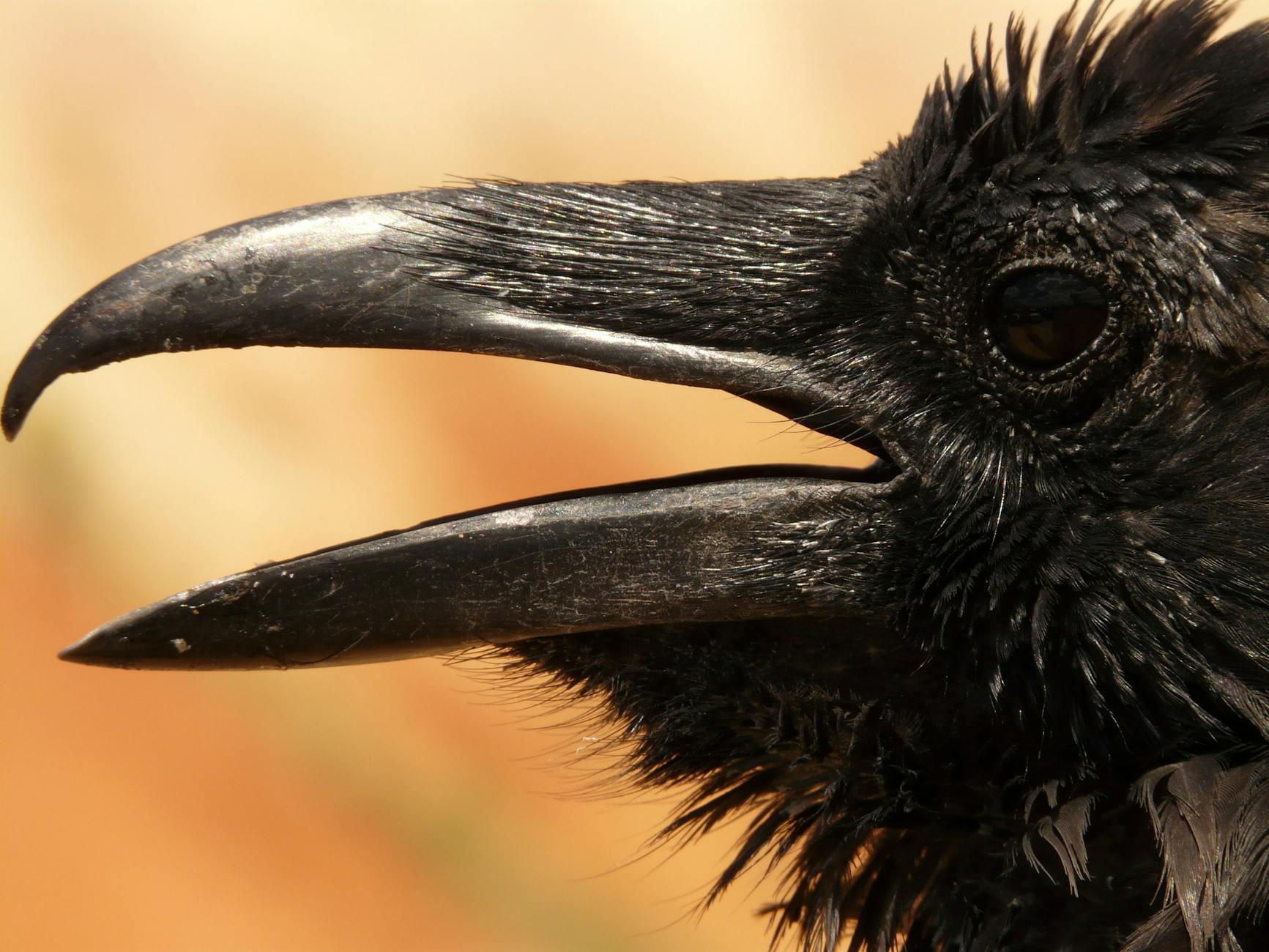
In the Pacific Northwest, there is a widespread cultural trend of holding crows in high esteem, revering them as almost mystical creatures. To put it simply, the PNW is obsessed with its crows. The University of Washington even has a research institution dedicated to studying the corvids. If you have heard the crow ‘facts’ going around online, then they probably came from Dr. John M. Marzluff at UW. He and his team were the ones that discovered that crows hold ‘funerals’ for the dead and recognize and remember individual human faces. However, as is the case with many scientific topics, the media has significantly misinterpreted the findings of UW’s Avian Conservation Lab. This has given the average PNW crow enthusiast the wrong impression about these birds, leading them to make statements such as:
“Crows not only learn if a person has good intentions or not, but they also will communicate with each other and even pass on intergenerational prejudices.”
“Crows never forget a face.”
“If you show them loyalty, they’ll defend you.”
“If a crow attacks you, it means you are a bad person and you probably deserved it.”
“Did you know crows recognize people and tell other crows if you’re nice or mean?”
“They absolutely remember your face if you’re nice to them, and they pass that info along to their murder-mates and children. I’m on a first name basis with my neighborhood crows.”
-comments from r/Portland
and
“I’m out”
“me too”
“Oh my God. Do not fuck with crows.”
-comments from ‘barter town’
There are dangers involved with misinterpreting crow facts including 1) an increase in human-wildlife conflict, 2) misguided conservation efforts, and 3) all your friends turning on you in the group chat when you ask to borrow a BB gun to shoot one. Therefore, the widespread misunderstandings of crow facts must be corrected.
Let’s start with crow ‘funerals.’ It is often said that crows have funerals or “hold vigil” to memorialize their dead and process the loss. This is a complete mischaracterization of crow behavior when they encounter a crow carcass. The particular behavior that crows occasionally display when they encounter a dead crow has only been characterized as a ‘funeral’ since 2012. These cacophonous displays are rare. It is not the case that every crow gets memorialized with a crow funeral when they die. These only happen when crows encounter a deceased crow that has died under unusual circumstances. These ‘funerals’ are not about memorializing the dead, but about survival. It’s not about mourning or processing loss, it just pragmatic. They gather as a large group (for protection) and spend some time observing the area to perceive any threats and possibly identify what killed it. Crow ‘funerals’ are not sacred rituals. During these ‘funerals,’ crows are often observed pecking at and even having sex with the carcass.
Researchers at the Avian Conservation Lab conduct regular experiments to study these ‘funerals,’ which should make us question whether the regularity of these experiments is actually a result of the lab training the crows to behave in this way, especially because these displays are not often observed in the wild. (Crow funerals are not often witnessed in the wild, but they happen frequently at UW. Hmmm.) It is also apparent that the researchers themselves promote the ‘holding vigil’ misinterpretation because they choose to perform this experiment as a ritual. A reporter who witnessed one described the way the researcher carefully folded and unfolded the cloth around the crow carcass as “religious.”
Myth: When a crow dies, other crows gather together to hold vigil, commemorate their friend, and process their grief.
Fact: Crows sometimes display a unique pattern of behavior by gathering at the site of a crow carcass to investigate, and occasionally engage in acts of necrophilia.
Crows do not recognize faces. This claim is maybe the most repeated crow ‘fact’ out there, but there is little evidence to prove it. Studies done at the Avian Conservation Lab have proven that crows can recognize highly unusual masks, not human faces. A researcher wore the mask of a deformed caveman while harassing crows and conducing the crow ‘funeral’ research. The crows were then observed aggressively cawing at anyone who wore the mask. This proved that crows can recognize an object that a human wears. This study provided zero evidence that crows recognize and remember individual faces. The findings suggest that if someone wearing a bright red hat was mean to a bunch of crows, those crows would be likely to act aggressively toward anyone with a bright red hat in that area.
Researchers at the Avian Conservation Lab have been conducting experiments like this for over a decade. In 2012, they thought they had to wear a mask or else the crows would recognize them by their faces. But today, the researchers know that the crows identification is not so precise, so all they do now to avoid recognition is wear a hood.
Myth: Crows recognize faces and they’ll remember you if you are nice or mean to them.
Fact: Crows recognize objects (clothing, hair, silly masks) that they associate with things/people that impact their survival, like potential threats and easy food.
Bonus: plenty of animals actually can recognize individual human faces, including dogs and sheep, but for whatever reason we don’t see that as an extraordinary trait in any other animal.
This leads to another misinterpretation regarding crow intelligence. Crows have been proven to have good memory and problem-solving skills, but these abilities are highly specialized. Because of our tendency to anthropomorphize, when people hear of high crow intelligence, they often assume this includes some cognitive ability that allows them to form opinions about people and explore abstract ideas. However, when it comes to crow intelligence, the evidence suggests that it is entirely about survival. Crows don’t follow you on your walk because they’ve befriended you and think you’re a good person. They follow you because they have identified you as a source of food. The crow mind is not like the human mind. A Crow’s intelligence, while significant, is limited to its survival.
It is also often said about crows that they acquire knowledge that is then passed on to their children. People tend to think that when a crow perceives a threat, they tell their offspring about that threat to aid their survival. There is simply zero evidence to suggest that this is true in any way. What the evidence shows is that crows respond to threats in their environment, and their offspring then observe the behavior of their parents and follow suit. Some people go as far as to say that if you’re mean to a crow, it’ll fly home and talk shit about you with all the other crows, and then they’ll all hate you for generations. Fortunately, evidence suggests that their complex vocalizations communicate about food sources and immediate threats, not the people they saw that day.
Crows do not need our help or protection for survival. The inclusion of the American Crow in the Migratory Bird Act of 1918 gives people the impression that crows are endangered, or at least that conservation efforts are necessary to protect crows. This is not true. In fact, environmental factors (including people feeding crows) can lead to a huge population growth which results in an imbalance in the ecosystem. For this reason, the migratory bird act of 1918 allows the killing of crows for a wide variety of reasons. In fact, the ODFW has determined that there are so many crows in Oregon that, if you get a crow validation listed on your hunting license, there is no limit whatsoever to the number of crows you can kill. Crows are the only bird in Oregon that have no limit, and open season for crows is longer than any other migratory bird. Additionally, crows are highly adapted scavengers that can easily find food without the assistance of humans. The practice of feeding crows can result in health risks to crows primarily, but also to people; aggressiveness in the crows and neighbors; noise and property damage; and all your friends ganging up on you just because you want to stop your neighbor from doing it.
The perception of crows as extraordinarily intelligent and magic creatures, although widespread in the Pacific Northwest, is a result of gross misinterpretation of crow facts and overestimation of crow abilities that grew out of our human tendency to anthropomorphize. This misinterpretation of crow facts has led to an inflated reverence that is not based on the reality of crow behavior. This misguided reverence has led some people to aggressively question their friend Patrick just because he doesn’t hold the same inflated opinion. Understanding their behavior realistically allows for better strategies for coexisting with crows…and each other.
 Both.And.Yet.